Crew camp housing at your job site
Furnished fifth wheels and travel trailers for your crew, placed on the job site or beside it, anywhere in the 48 contiguous states.
- Private-bedroom units for supervisors, and bunkhouses that sleep up to four workers
- A full kitchen and a bathroom with a walk-in shower in every unit
- Power, water, sewer, permits, and winterization handled by us
- Tank pumping, propane, and repairs for the length of the job, on one monthly invoice, with a 30-day minimum and then month to month
Call (850) 605-4922
What your crew stays in
Every camp is built from furnished fifth wheels and travel trailers, matched to how your crew is organized. Supervisors and solo workers get a unit with a private bedroom. Crews share bunkhouse units that sleep up to four workers.
Private-bedroom units
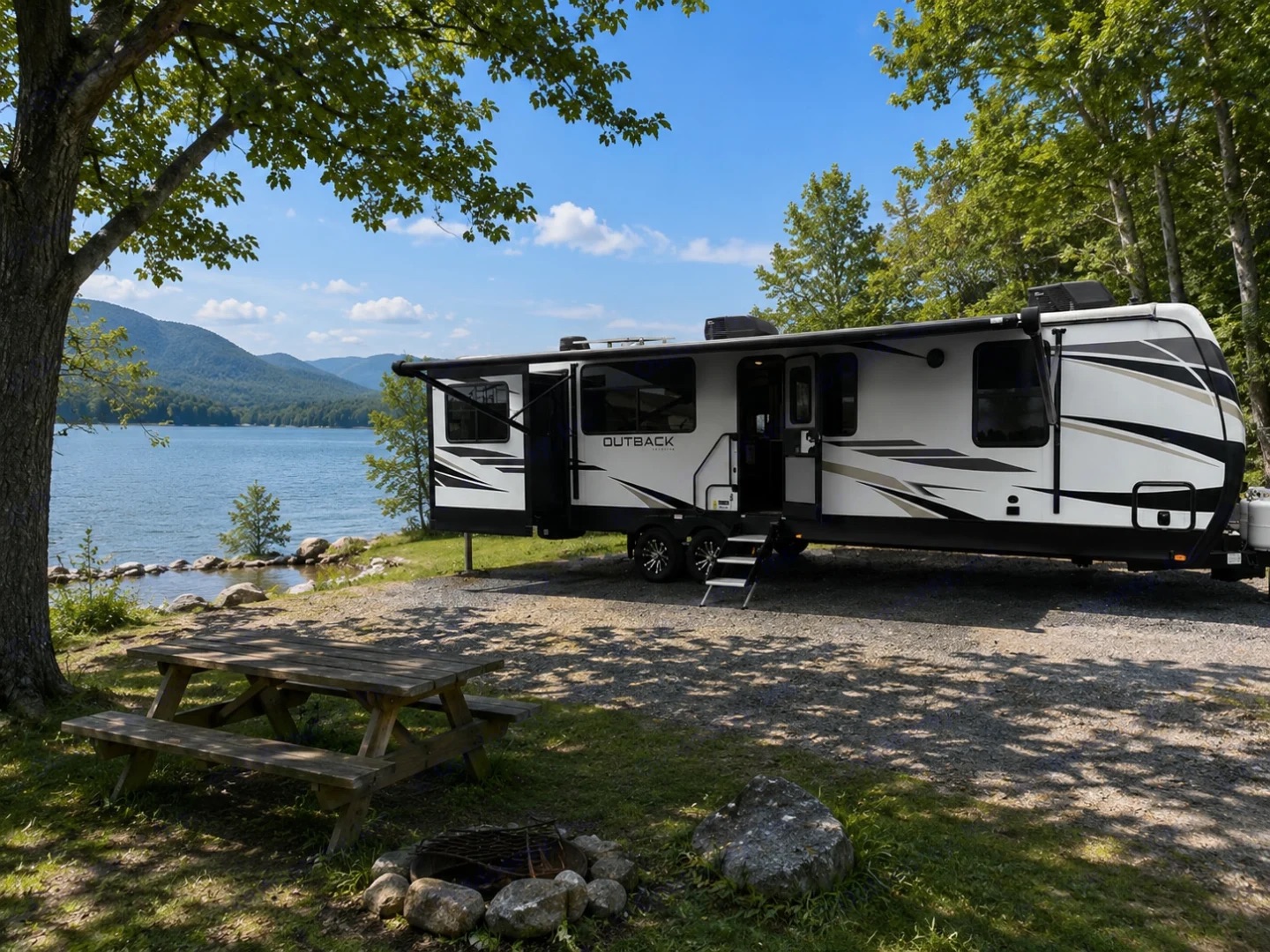
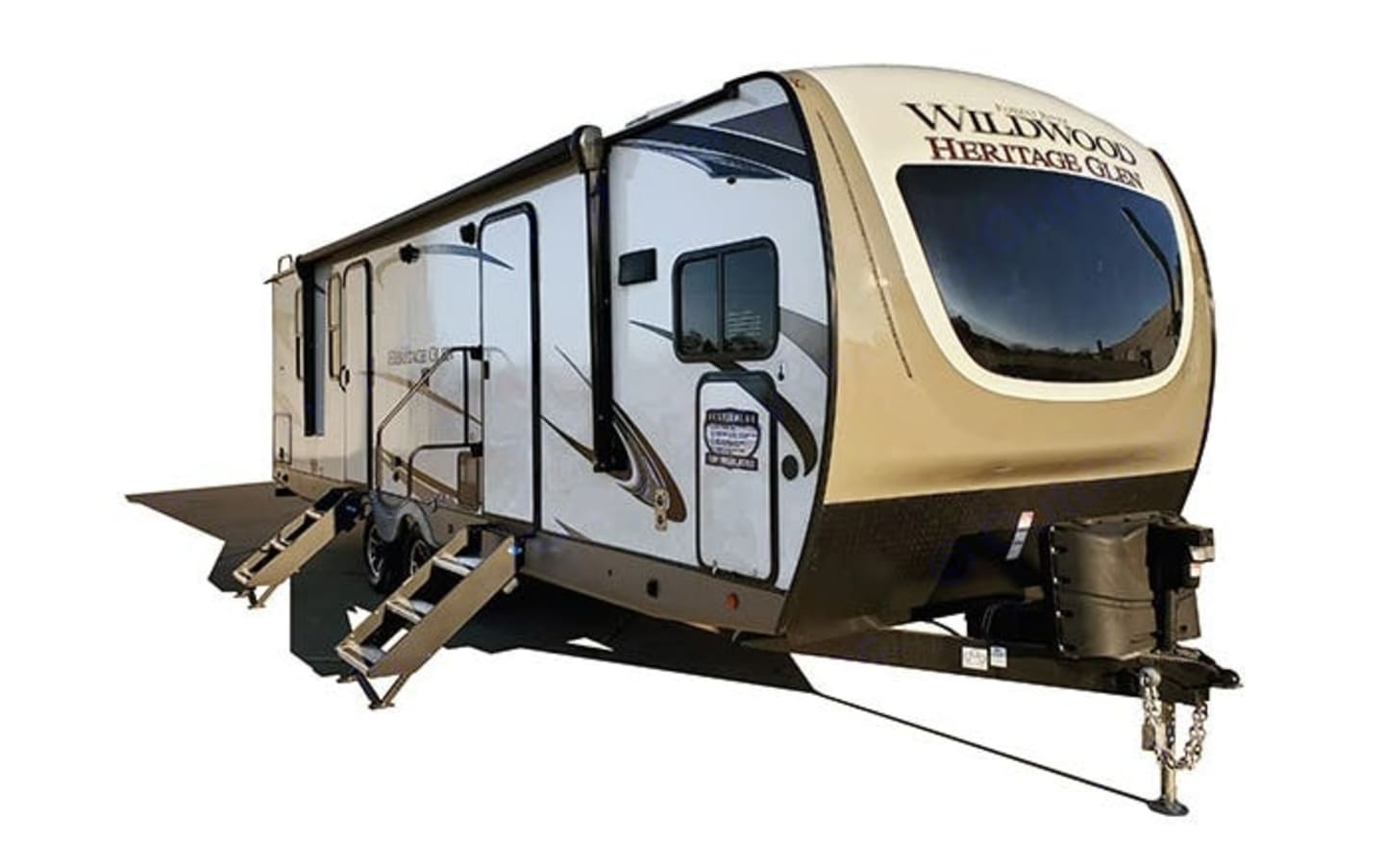
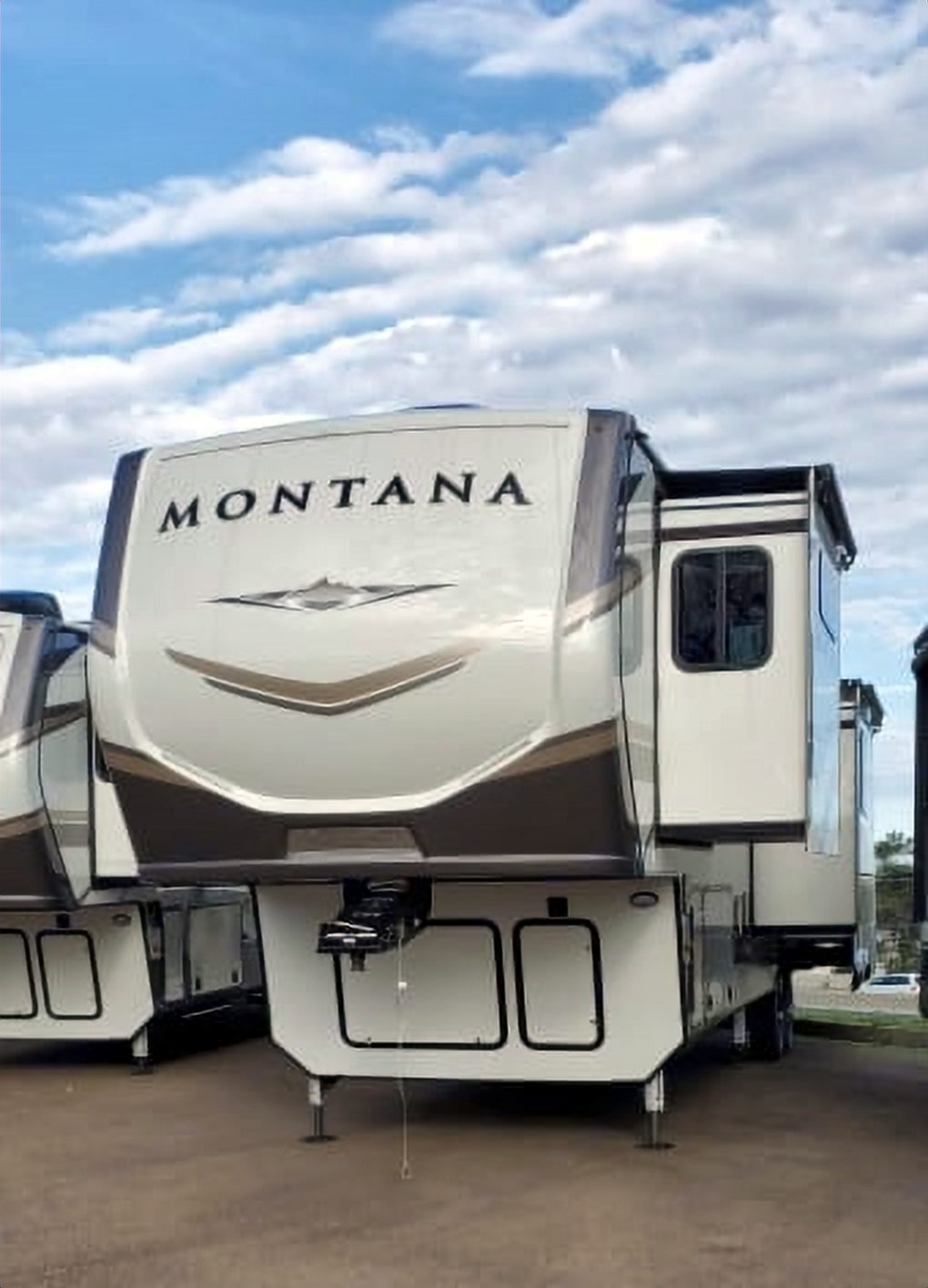
Each has a front bedroom with a door and a king or queen bed, a full kitchen, and a living area with reclining seats. These fit superintendents, site leads, and anyone on a different shift who needs to sleep while the rest of the camp is up. The Keystone Montana has a private office, so a superintendent can work on plans and daily reports without leaving the unit.
Examples from the fleet: Keystone Outback, Wildwood Heritage Glen, Keystone Montana.
Bunkhouse units
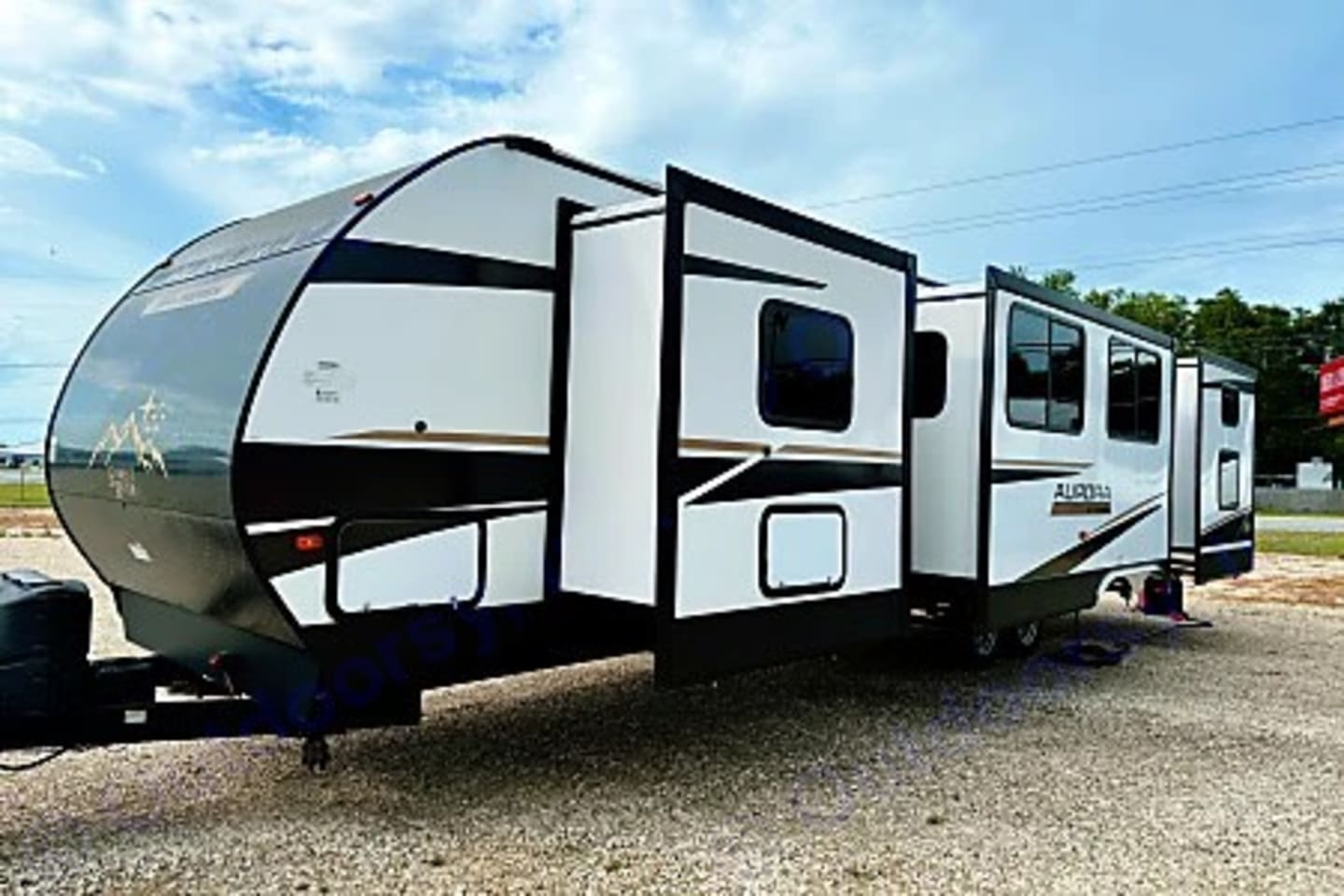
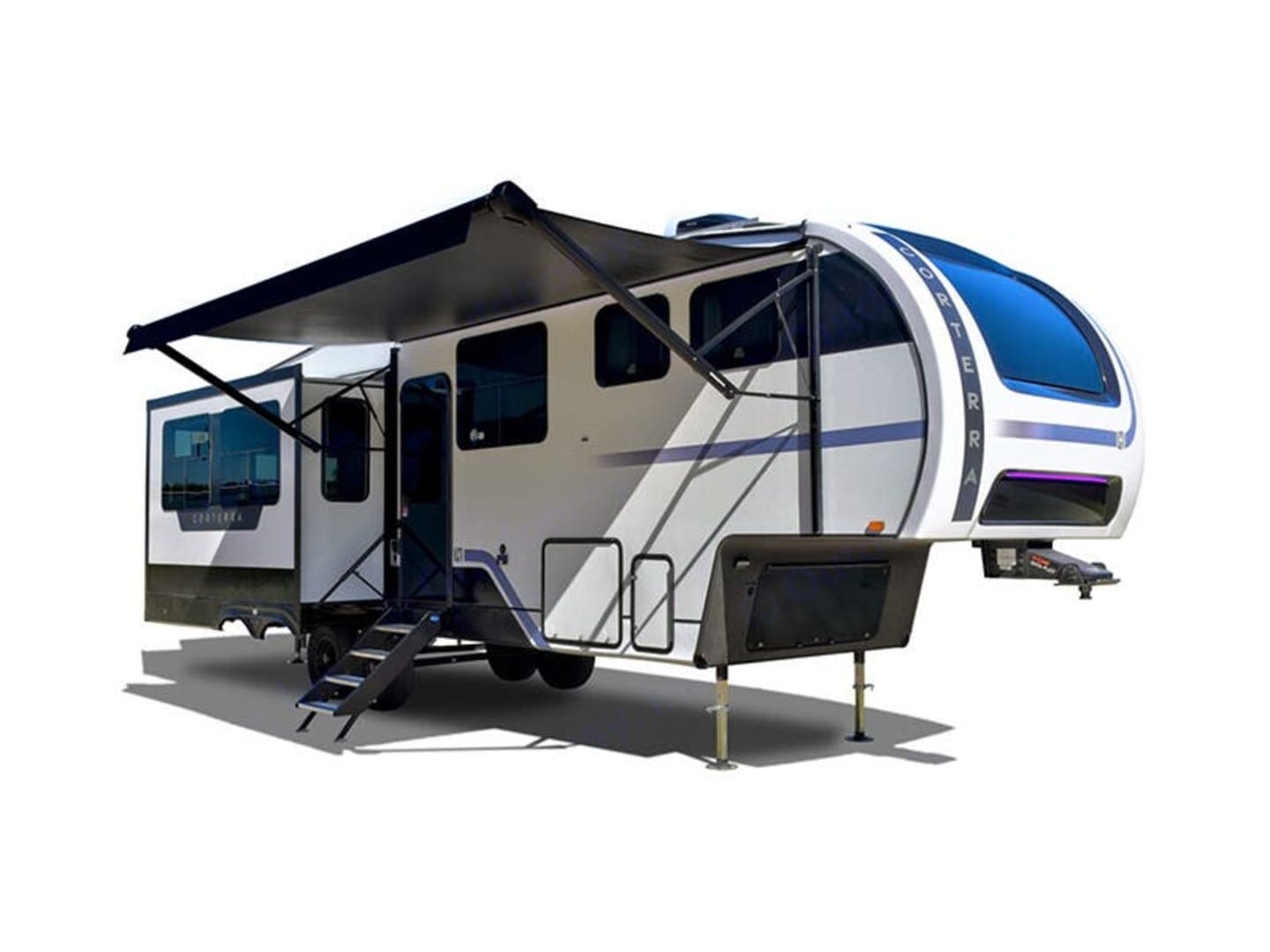
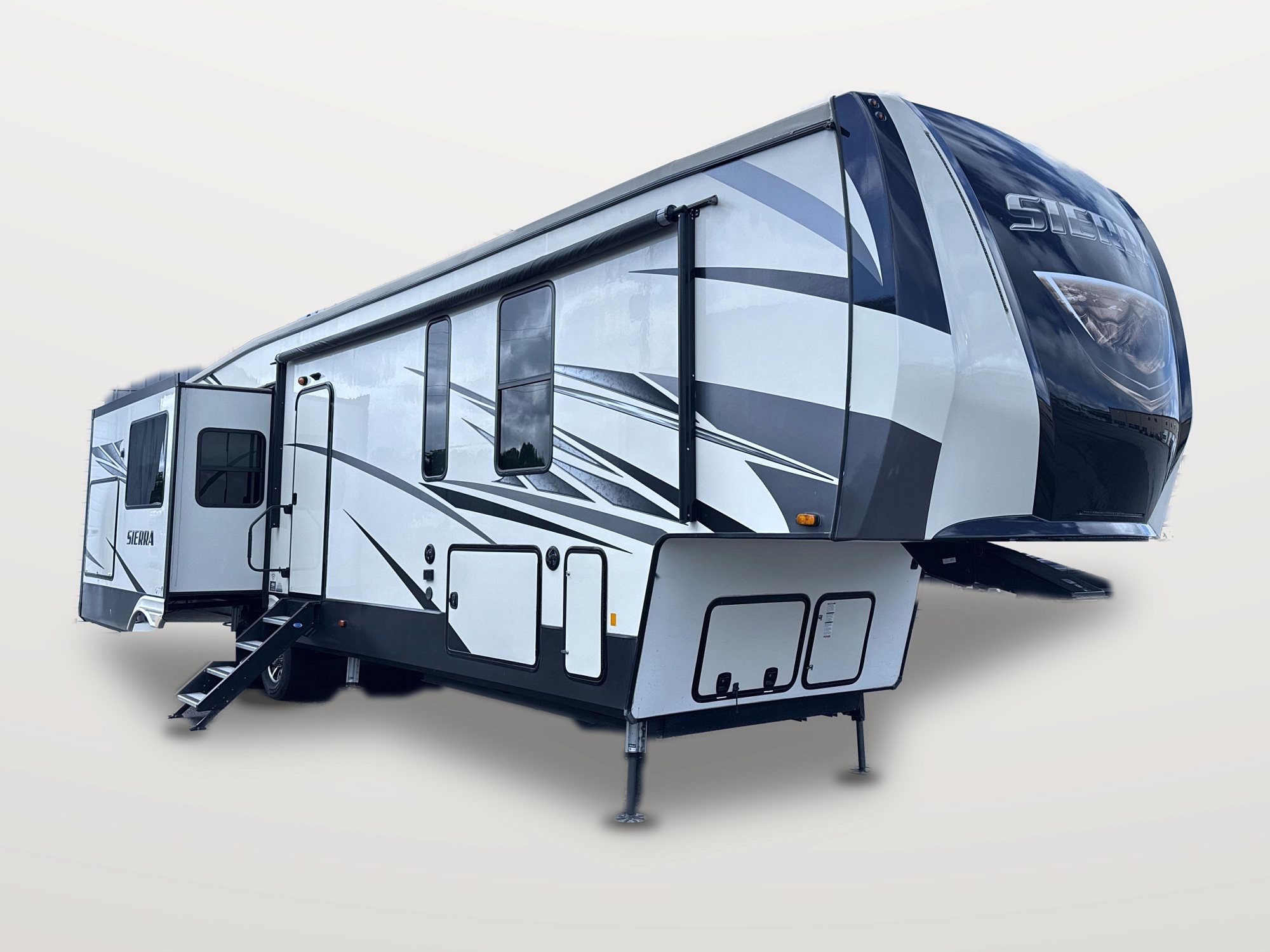
Each has a private main bedroom and a separate bunk room, so up to four workers get their own beds while sharing the kitchen, bathroom, and living area. Some have a loft. Putting four workers in one unit lowers the cost per worker and means fewer units for the site to hook up.
Examples from the fleet: Forest River Aurora, Heartland Corterra, Forest River Sierra.
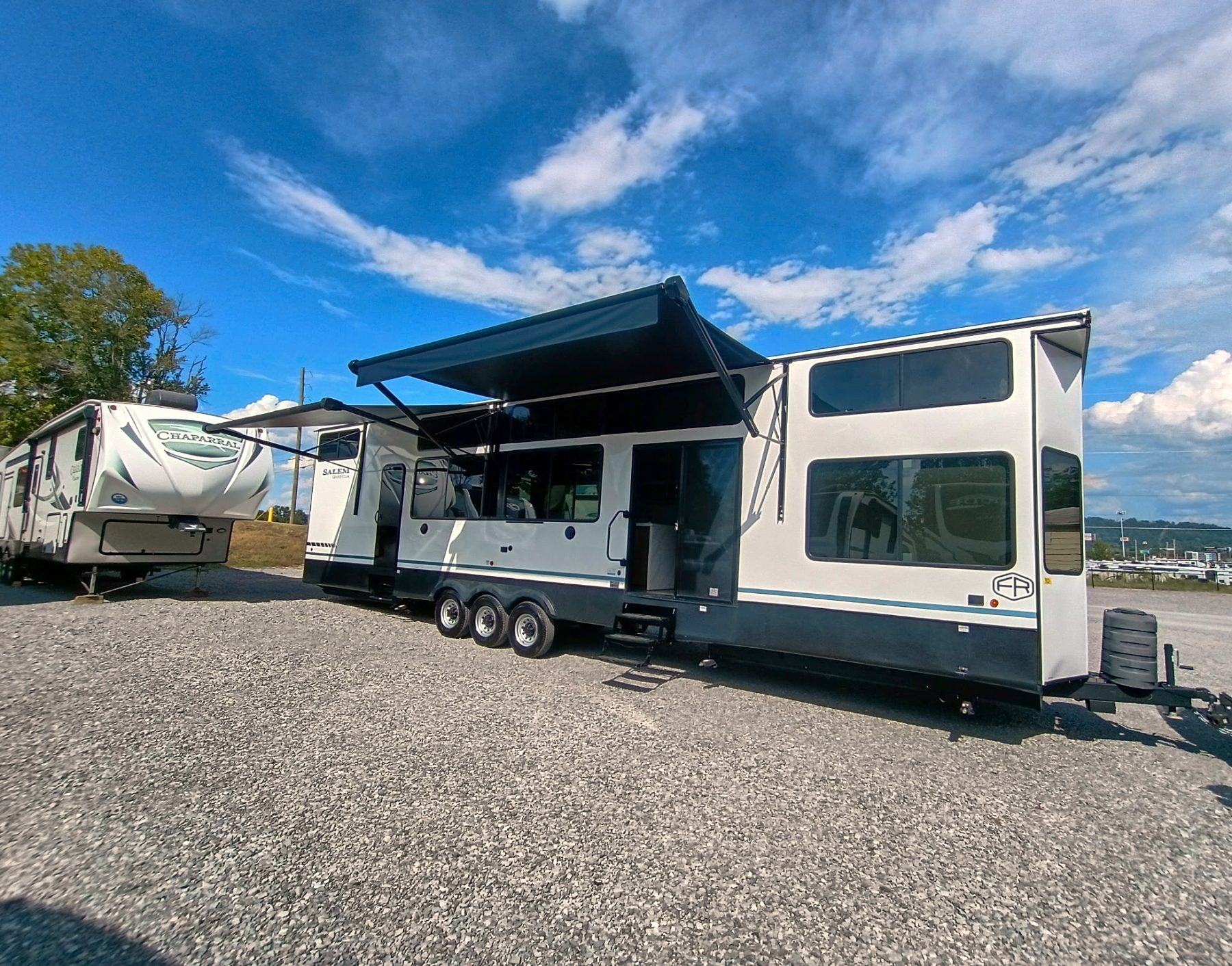
Salem Grand Villa
The Grand Villa has a king bedroom with a door, two lofts, a full bathroom and a half bath, a stacked washer and dryer, and a full-size French-door refrigerator. It fits a crew that wants laundry in the unit on a long job.
In every unit
- Full kitchen with a gas range, oven, microwave, and large refrigerator, stocked with kitchen essentials
- Bathroom with a walk-in shower
- Furnace and air conditioning
- Living area with seating and a TV
- Late-model unit, inspected and cleaned before it goes out
What we handle at the site
We plan and run the site work: the pad, power, water, sewer, propane, permits, and winterization. While the job runs, we handle tank pumping, propane refills, and repairs, and a service technician is on call around the clock. When it ends, the units come out, the utilities are capped, and the site is put back the way we found it. You get one monthly invoice for the whole camp.
| Need | How it is usually done | Other option |
|---|---|---|
| Site | A leveled gravel pad laid out around equipment and laydown areas | An existing lot |
| Power | A utility extension and a temporary pole with a 50-amp outlet for each unit, wired by a licensed electrician | One or two commercial generators for a small camp |
| Water | The site's water line run to each unit, with a filter and pressure regulator | Water delivered to holding tanks |
| Sewer | A tie-in to the site's sewer or septic system | Holding tanks pumped on a schedule |
| Heat | Furnace on propane, refilled on a schedule | Electric heat where power allows |
| Winter | Skirting, heat tape, tank heaters, and heated hoses | Left off on jobs that end before freezing weather |
| Permits | A county temporary-use permit, filed by us | Filed by the prime contractor |
Recent crew camps
PG&E after the 2024 Park Fire, California
Six camps at PG&E facilities in Butte and Tehama counties, each with 3 to 8 trailers housing 6 to 20 people. Plant and substation staff lived on site through the rebuild while line crews rotated through. The camps ran on commercial generators and the sites' own water.
Data center build, Virginia
14 units for 26 workers over 17 months, on a data center build run jointly by state government and private contractors. Twelve units with two bedrooms housed two workers each, and two private-bedroom units housed one worker each. The job was booked for 12 months and extended to 17.
U.S. Department of Agriculture
We have housed crews on government projects, including work with the U.S. Department of Agriculture, answering each line of the temporary housing specification for heating and cooling, electrical work, fire safety, and occupancy.
Michael Wojciak, Agile's founder, wrote about lodging for recovery crews in Disaster Recovery Journal: The Lodging Gap in Site Recovery Plans.
What a crew camp costs per worker
We quote each project, with volume pricing on multi-unit camps. As an illustration only, a trailer at about $3,000 a month that sleeps four works out to about $750 per worker per month, or about $25 per worker a night, before site setup. For comparison, the GSA standard federal lodging rate for fiscal 2027 is $113 a night. The monthly price per unit includes propane refills, tank pumping, and repairs. Site setup is quoted once per site, and pickup at the end of the job is included. The minimum term is 30 days, then month to month.
Federal lodging rate: GSA fiscal 2027 per diem rates, Federal Register, September 10, 2026
Questions about crew camps
Is a crew camp the same as a man camp?
Yes. "Man camp" is the older industry term, popularized during the North Dakota oil boom. Most operators now say crew camp or temporary workforce housing. Our camps house line workers, plant operators, tradespeople, and project managers.
Is a camp at the job better than renting RV park spaces?
A camp at the job costs more up front and less each month, and it keeps the crew on or beside the work. RV park spaces cost little up front but add monthly rent per space, depend on long-term openings that are hard to find in winter, and add a commute. On jobs that run several months, a camp at the job usually costs less overall.
How is a crew camp billed?
One monthly invoice for the whole camp, coded to your project or cost code and itemized by unit when you need it, with purchase order and project numbers on every invoice. A W-9 and certificate of insurance are on file, and net-30 terms are available to qualified companies.
What is the minimum term?
Thirty days. After that the term runs month to month and extends as the schedule moves, so there is no commitment to the full project length up front.
Can a camp run through winter?
Yes. Units are winterized with skirting, heat tape, tank heaters, and heated hoses, and propane is refilled on a schedule. We keep units running through winters in North Dakota, Minnesota, northern Wisconsin, and Maine.
Do you work to federal temporary housing specifications?
Yes. We answer each requirement in the specification and supply the submittals the contracting officer asks for, such as a delivery schedule, a site layout, unit photos, and floor plans.
Where do you set up crew camps?
We set up crew camps anywhere in the 48 contiguous states, either on the job site or on an existing lot beside it. Send the site location with your crew size and expected duration, and the quote will include the site work for that location.
Tell us about your project
Send the crew size, the site location, and how long the work will run. We'll come back with a unit mix, a site plan, and a quote.
Call (850) 605-4922
Answered 7 a.m. to midnight Eastern, every day.
By Michael Wojciak, founder of Agile RV Housing.